SAF at Scale: The $100 Billion Question
Can sustainable aviation fuel production meet the ambitious targets set by ICAO and major operators?

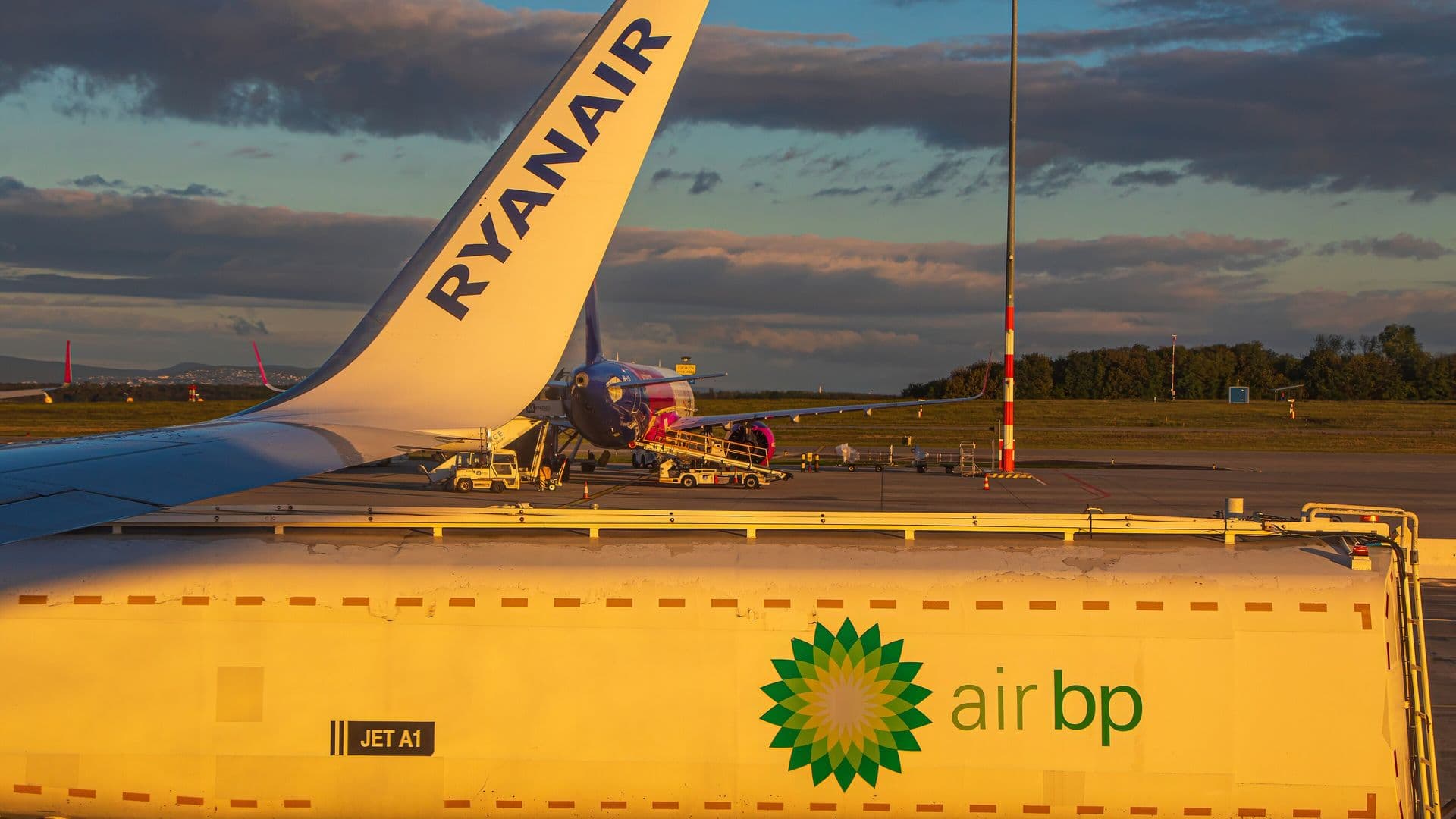
Sustainable aviation fuel currently represents less than 0.1% of all jet fuel consumed globally. The gap between today's reality and the industry's 2050 net-zero commitment is vast.
Sustainable aviation fuel occupies an unusual position in this industry: everybody agrees it is the answer, and almost nobody can buy enough of it. Produced from used cooking oil, agricultural residues, municipal waste or — at the frontier — captured carbon and green hydrogen, it is chemically close enough to conventional jet fuel to be dropped into existing aircraft without modification. That is its great virtue. It requires no new engines, no new airframes and no new airports.
The constraint is supply. Global SAF production remains a rounding error against total jet fuel demand, and the feedstocks that make the cheapest pathway viable — waste fats and oils — are finite and already contested by road transport and other industries. Business aviation, which burns a small fraction of commercial volumes, is in principle well placed to run on SAF entirely. In practice it competes for the same scarce litres.
The price of a clean conscience
Where SAF is available at business aviation FBOs, it typically carries a substantial premium over Jet A-1. For a customer chartering a heavy jet, the incremental cost of a transatlantic sector is real but rarely decisive. The obstacle is more often physical availability: a handful of airports in Europe and North America offer reliable uplift, and the rest of the network does not.
The industry has partly solved this with book-and-claim, an accounting mechanism that decouples the molecule from the claim. An operator purchases SAF that is physically delivered wherever it makes logistical sense, and claims the emissions reduction against a flight elsewhere. Purists object that nothing changes in the aircraft that actually flew. The counter-argument is that the mechanism sends capital to producers, which is what expands supply.
What has to happen next
Scale depends on capital reaching second and third generation pathways — alcohol-to-jet, and eventually power-to-liquid — where feedstock is not constrained by the waste stream. Those plants are expensive, slow to build and dependent on policy stability across the decade it takes to finance them.
For charter clients the practical question is narrower and more immediate: whether the operator can demonstrate what was actually purchased, from whom, and under which certification scheme. A SAF claim without a registry entry behind it is marketing.