The Rise of the Ultra-Long-Range Cabin
As aircraft capable of 14+ hour flights become the norm, cabin design is fundamentally changing.

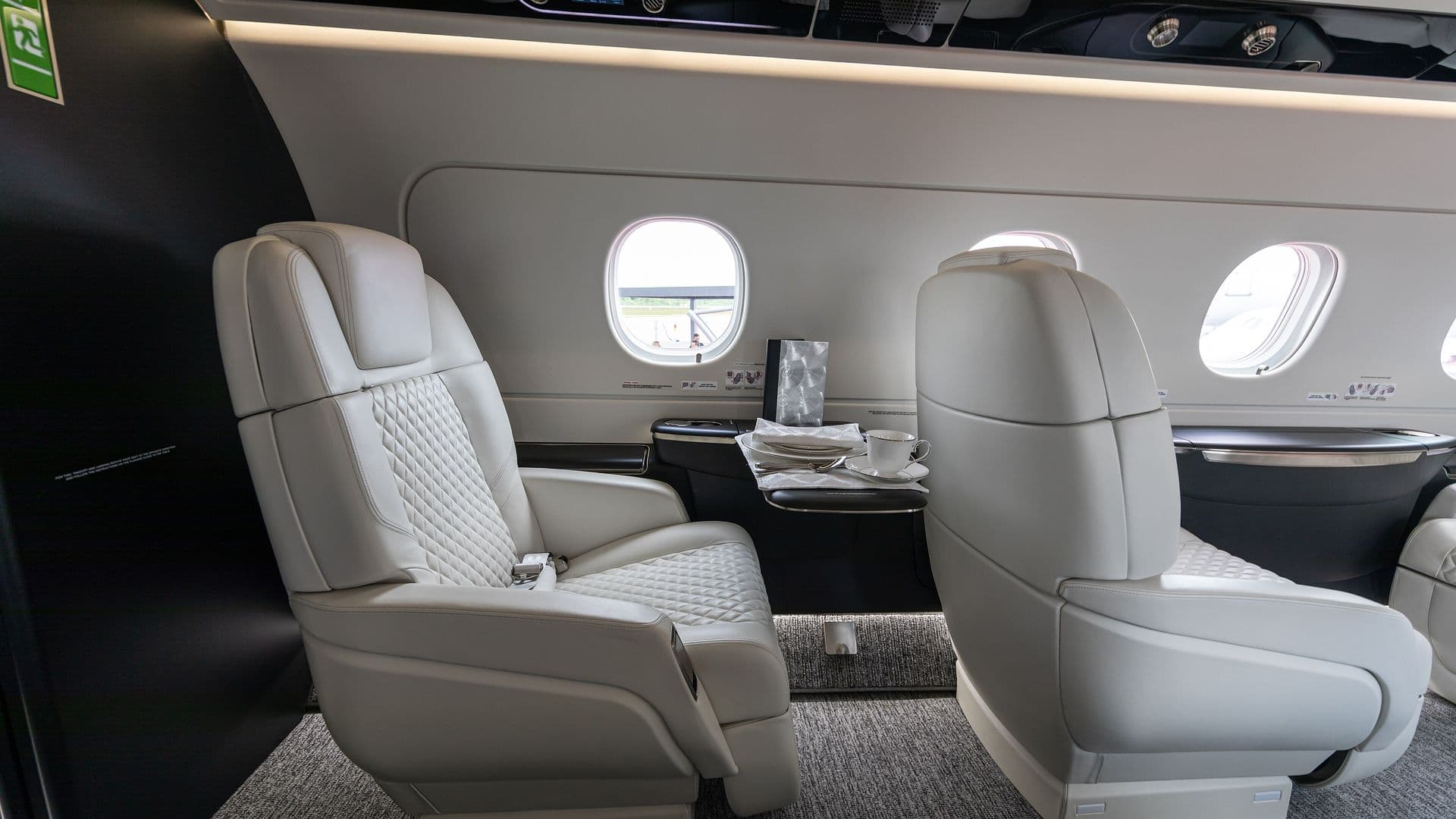
When your aircraft can fly non-stop from London to Sydney, the cabin is no longer just a seat — it's a habitat. Designers are rethinking everything.
The defining constraint of an ultra-long-range cabin is not space. It is time. When an aircraft can hold seventeen hours in the air, the interior stops being a means of transport and becomes an environment its occupants must live in through a full sleep cycle, a working day and a meal service.
Designers have responded by borrowing from hospitality rather than from automotive. Cabin altitude is pushed as low as the airframe permits, because the difference between an equivalent of 6,000 feet and 4,500 feet is measurable in how a passenger feels on arrival. Humidity is managed upward. Lighting sequences are programmed against the destination time zone rather than the departure one.
Zones, not seats
The prevailing layout logic divides the tube into four discrete experiences: a forward club for working, a conference or dining area, a lounge, and a genuine aft bedroom with a fixed bed rather than converted seating. Each transition is marked by a change in acoustic treatment and lighting temperature, so that moving through the aircraft feels like moving between rooms.
Acoustics have become the quiet battleground. Below roughly fifty decibels, conversation stops requiring effort and sleep becomes possible without noise cancellation. Achieving it means isolating trim from structure, tuning the environmental control system's ducting, and accepting weight in places where weight is expensive.
The weight problem never leaves
Every kilogram of stone, timber or upholstery is a kilogram of fuel that cannot be carried, and on an eight-thousand-nautical-mile mission that trade is unforgiving. The result is an industry of convincing substitution: stone sliced to millimetres and bonded to honeycomb, veneers over composite substrate, plated fittings rather than solid metal.
The engineering rarely announces itself. A completions centre that does its job well produces a cabin in which nothing looks like a compromise, and every element behind the visible surface is one.